


HIVE
Designing the 2050 car experience.
The challenge
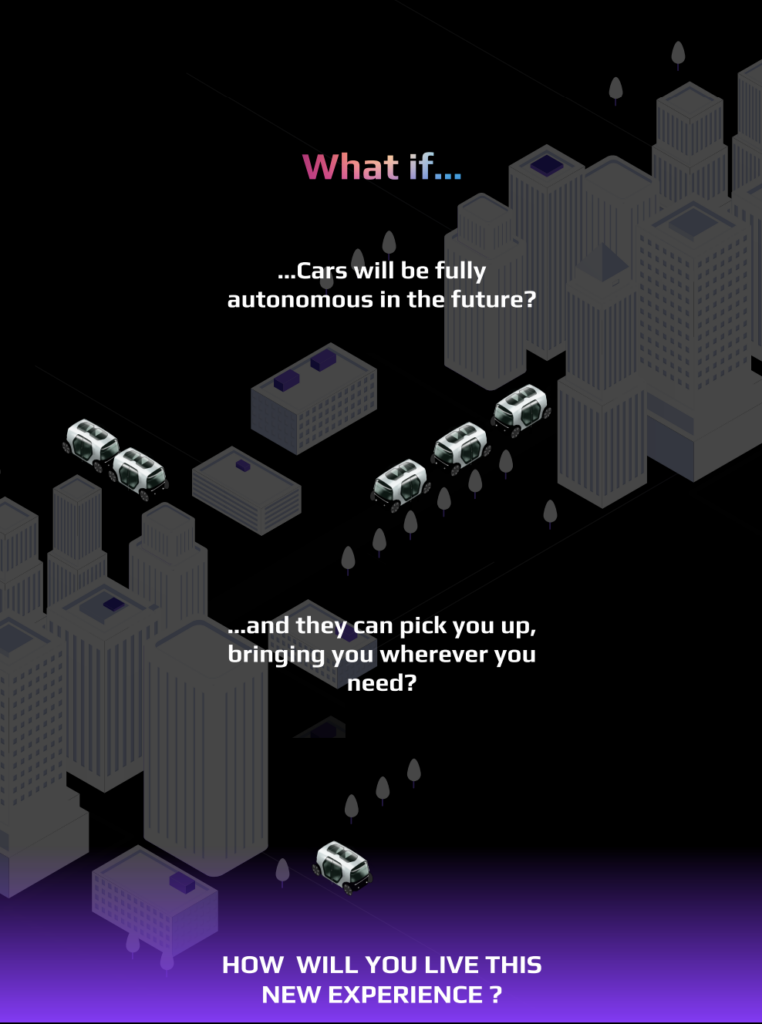
What will the cars of 2050 be like?
This was the question our design process began with.
Autonomous driving technologies will bring change in the way we approach the everyday use of vehicles and how we will see them in the future. The ownership patterns and types of car operators will probably change. We therefore have no idea what cars will look like and what they will represent for users in their daily lives in the coming decades.
My Role
UX researcher / UX designer / Information Architect / UI designer / Prototype specialist
Discover
Analysis
First, the team dove into understanding the whole deal behind this project. We did some desk research, but that only gave us the basics about car tech and where the industry might be headed. So, we went straight to the potential future mobility users to get what they’re all about.
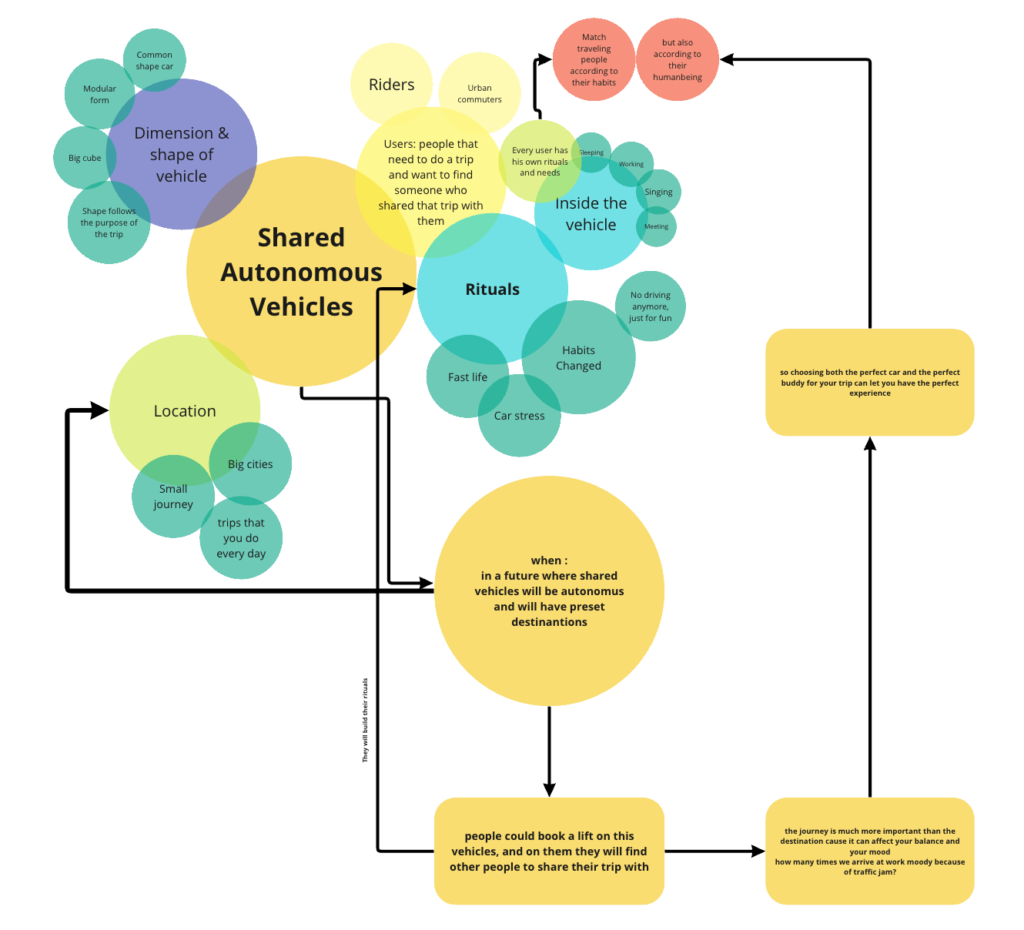
We figured out a major thing driving this project from all that digging. No matter what wheels people are used to or how they’ve been getting around, they get seriously attached to their usual ride. This attachment affects how they feel and the vibes they get from all their experiences with it.
Define
BRIEF
Once we got the gist of the design challenge, we got down to nailing down who the users were and how they’d use the thing we were working on. We threw around the “How might we…” question to figure out different ways people move around and commute every day, and to spot the biggest issues and chances.
We zoned in on creating a design story about the emotional connections we found in our digging.
We asked ourselves: “How can we bring the emotional bond to self-driving shared rides?”
How might we transfer the emotional bond to autonomous pooled vehicles?
USERS NEEDS
The key thing that stood out was making the insides of the rides change based on how people are feeling, and how those feelings come across. This way, we could bring the human-ride emotional bond into a space that the users do not own. We reckon that shared self-driving rides could become safe spots where people can chill out, feel what they’re feeling, and make the space their own.
We also see a way to tweak the insides of the rides as people’s moods change, giving them a chance to reconnect with themselves and roll with whatever mood they’re in within the self-driving ride.
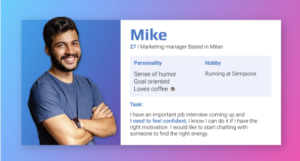
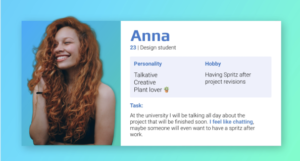
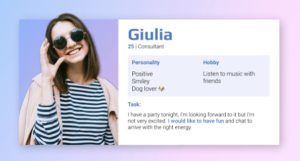
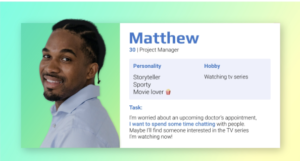
to achieve this, we created user types that reflected our target audience
DESIGN CHOICES
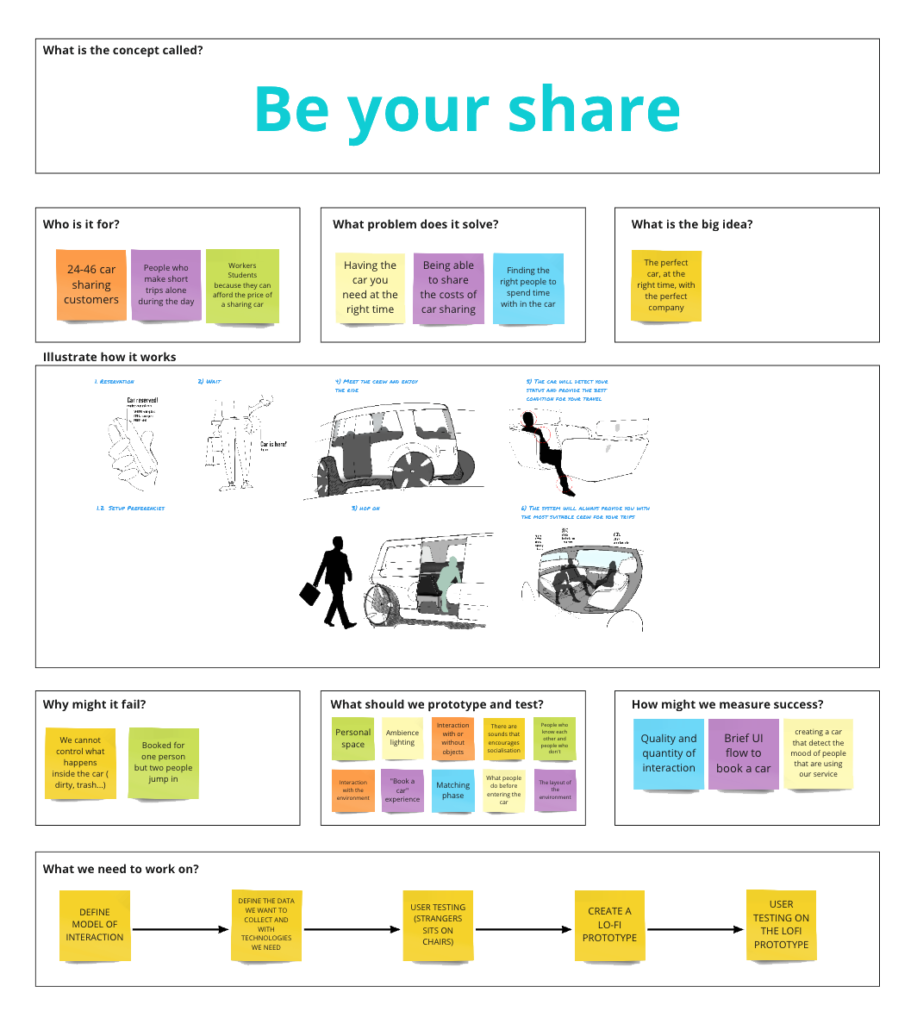
This gave rise to an initial embryonic idea, an MVP showing how a new type of experience could be created that could transform the way car travel is conceived
Develop
Hive
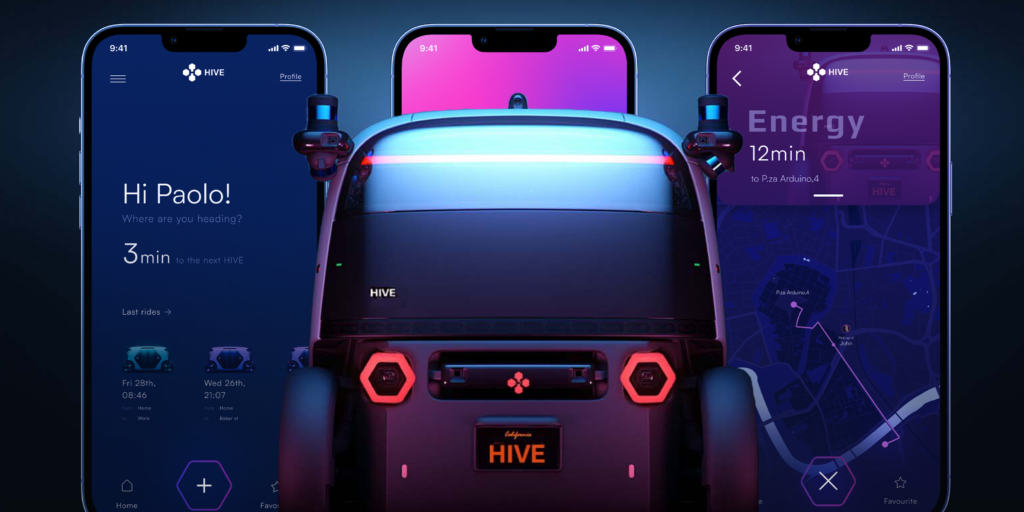
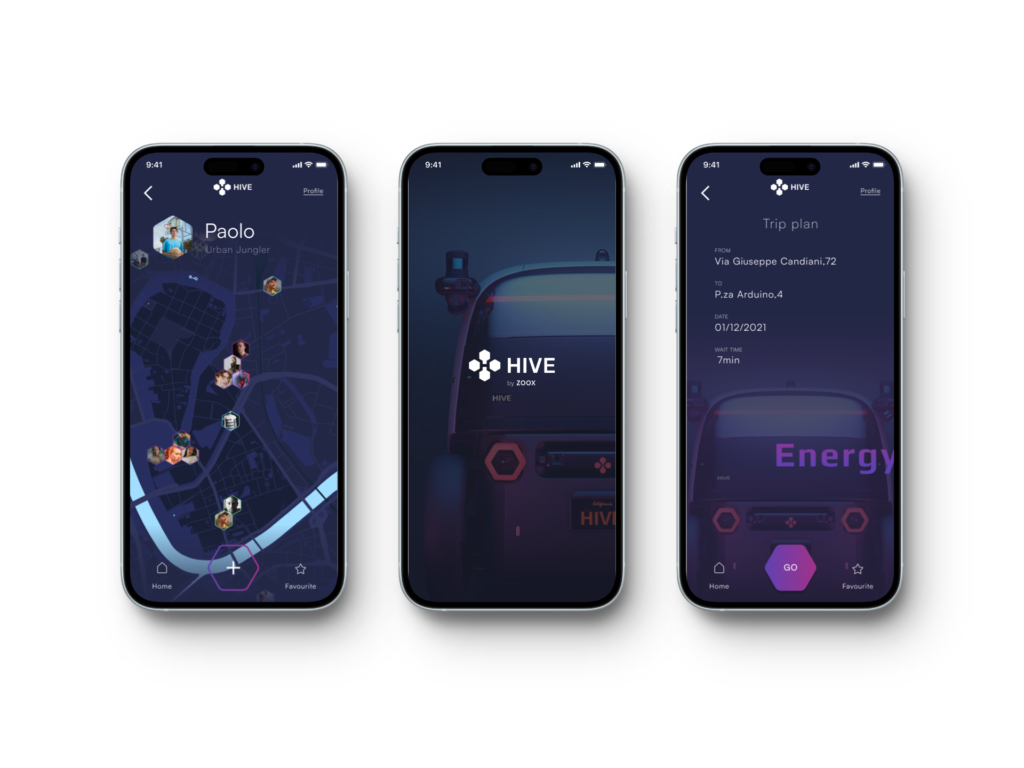
Hive is an autonomous car-sharing experience that offers you a journey completely tailored to your needs.
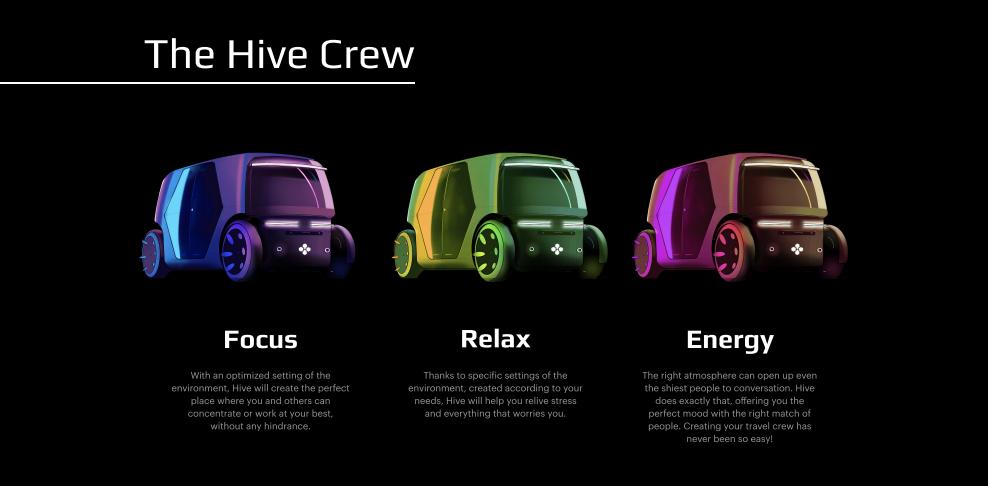
All you have to do is select the mood that best reflects you, book a vehicle and Hive takes care of the rest. Meet people inside the car who are looking for the same kind of experience as you, and enjoy the journey with them. As you travel with Hive, our system will analyze your response to the experience, it learns directly from your preferences and offers you optimized and improved journeys every time you travel with Hive.
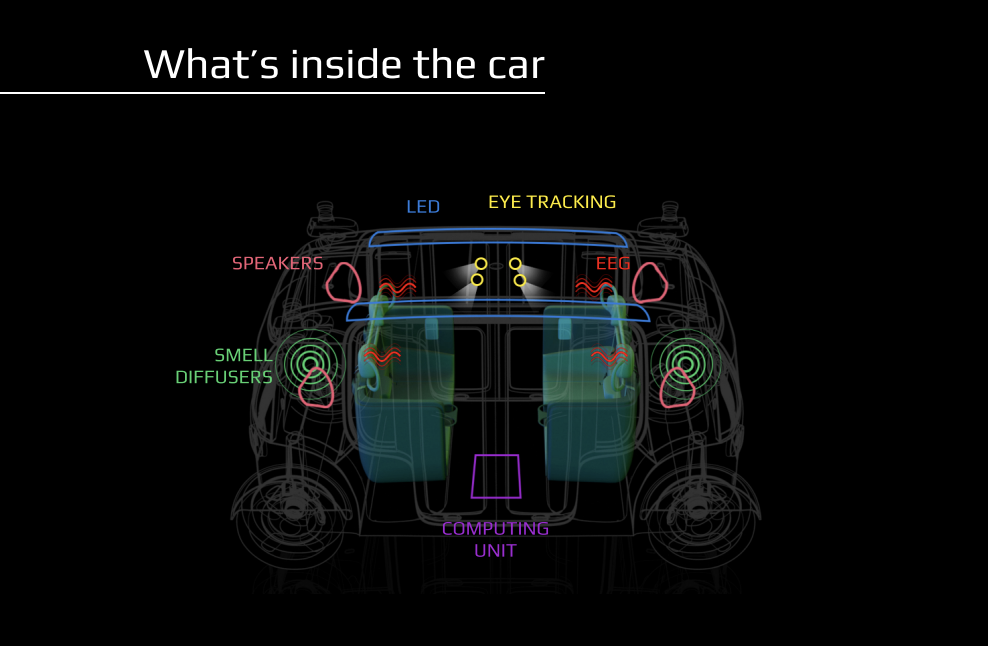
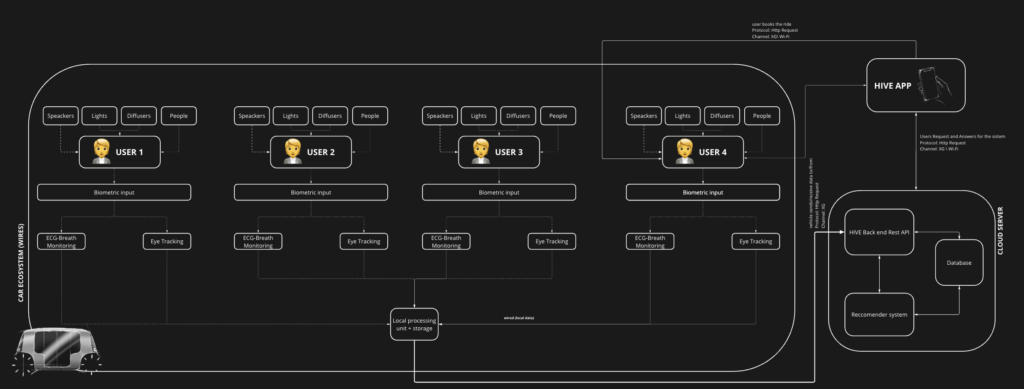
The system is divided into three components: the vehicle cockpit that hosts users and sets up an environment (working through lights, fragrances, and acoustic tones) able to indulge users’ chosen mood and to detect their biometric responses to the offered setting, a mobile app that hosts all the digital component of the mobility experience (from user profiling to trip booking and management of ambient settings,…) and a cloud infrastructure that supports the whole architecture, managing users’ data and vehicle fleet.
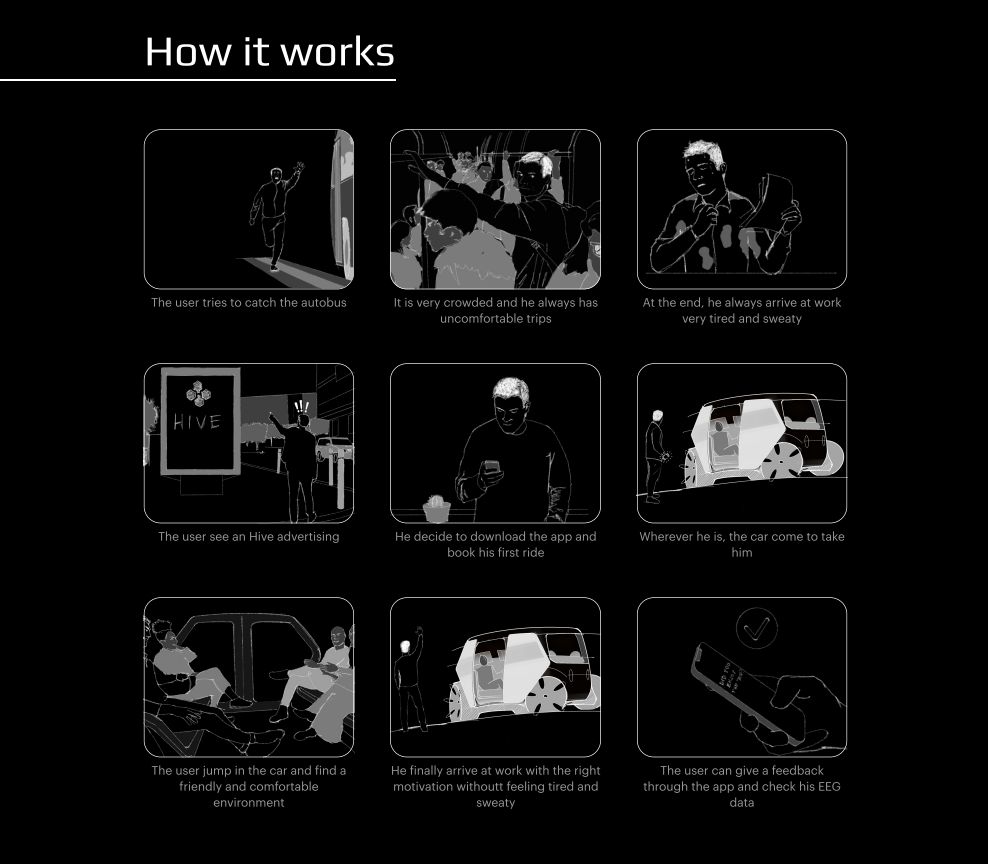
THe system
PHYSICAL PROTOTYPE
Deliver